
The Appearance of Shri Rama: A Divine Manifestation of Balance and Bliss
Pundit Lokesh Maharaj, Chairperson South African Hindu Maha Sabha Priest’s Council
The birth of Shri Rama, celebrated as Ram Navami, is not merely a chronological event in history; it is the moment where the infinite condensed itself into the finite for the sake of the world. As described in the sacred verses of the Ramcharitmanas, the appearance of the Lord is the “root of all happiness” (Ram janam sukhmool). For the Hindu, understanding the physical appearance and the philosophical nature of this manifestation offers a roadmap to spiritual and mental equanimity.
The Divine Form: A Symphony of Beauty and Power
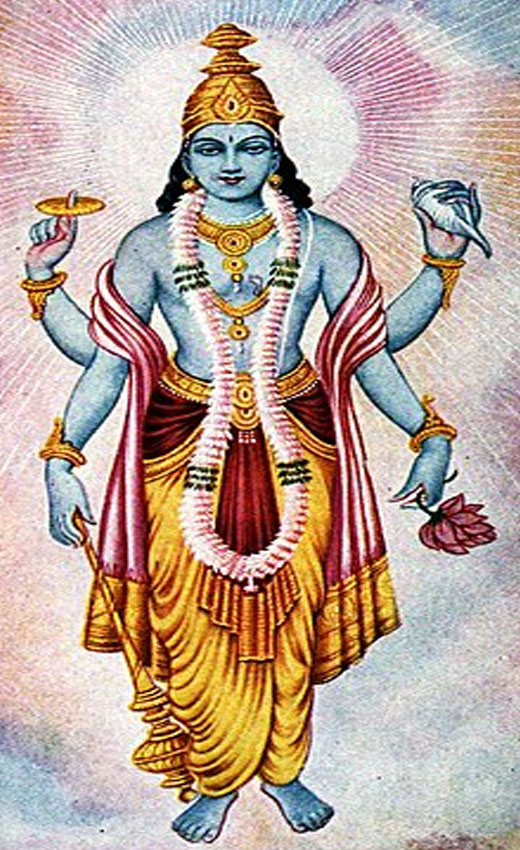 When Shri Rama first manifested to Mother Kaushalya, he did not appear as an ordinary infant, but in his majestic Chaturbhuja (four-armed) Vishnu form. This appearance was a profound “ocean of beauty” (sobha-sindhu):
- The Complexion: Described as Tanu Ghansyama, his body possessed the deep, dark hue of a rain-bearing cloud symbolising his capacity to shower grace upon a parched world.
- The Features: He possessed Nayan Bisala (large, lotus-like eyes) that radiate both compassion and authority.
- The Adornments: He wore the Vanmala (forest garland), signifying his connection to nature and the simplicity of the earth, contrasted by the divine weapons held in his four arms (Conch, Discus, Mace, and Lotus), representing his role as the protector of Dharma.
This “Adhbhut Roop” (amazing form) was so blindingly beautiful that it “stole the minds of sages.” It serves as a reminder that the Divine is both aesthetically perfect and functionally omnipotent.
The Philosophy of the Avatar: Beyond the Modes of Nature
A crucial lesson from the appearance of Shri Rama lies in the distinction between a human birth and a Divine Manifestation.
- Master of Maya: Unlike ordinary humans who are born due to Prarabdha (past karma) and are bound by the Trigunas (Sattva, Rajas, and Tamas), Shri Rama’s body is Nij Iccha Nirmit, created by his own will. He is the master of Maya, not its subject.
- The Paradox of Greatness: Mother Kaushalya’s realisation highlights a beautiful philosophical paradox: the same Lord in whose “every pore resides a universe” was now resting in her lap. This teaches us that the Supreme Reality is simultaneously transcendent (beyond our reach) and immanent (available to us through love).
- For the Welfare of the Selfless: The Ramayana specifies that the Lord takes form for the sake of Vipras (seekers of knowledge), cows (symbols of selflessness), Devas (natural forces), and Sants (saints). He appears when the selfless elements of society are under threat, proving that the Divine protects those who live for others.
Significance for the Modern Hindu
In an era of high stress and digital distraction, the description of Rama’s birth offers a template for internal environment management. The verses in the Ramayana describe the world at the time of his birth as being in a state of perfect balance: “neither too sunny nor too cold,” with “fragrant and cool breezes.” This symbolises the Sattvic state of mind. The lesson for the modern devotee is that the “Ram-consciousness” manifests in us only when we cultivate a calm, cheerful, and undistracted mind. A disturbed mind cannot perceive the God who is already present; training oneself to be “God-oriented” is the key to experiencing peace amidst modern chaos.
Lessons from Ram Navami
The celebration of Ram Navami is a call to align our “internal planets” and “zodiacs.” When our thoughts and actions become Anukool (congenial) to Dharma, the Lord “appears” in our lives as joy and clarity.
- Simplicity over Grandeur: At Kaushalya’s request, the Lord set aside his four-armed majesty to cry like a child (Sisu-leela). This teaches us that while the Divine is infinite, He is most easily accessed through the simplicity of pure, mother-like love (Bhakti).
- The Goal of Life: Tulsidas concludes that those who sing of this birth “escape the deep well of ignorance.” The ultimate takeaway is that by meditating on the appearance and character of Shri Rama, we find a “restful period” (Lok Bisrama) for our souls, moving from the turbulence of the world to the stillness of the Spirit.